Tuesday, June 20, 2017

What happened to Yahoo!?

So, for the last few days, the name, "Yahoo!" has been floating around the public and the their customers. Has anything been happening affecting Yahoo? I'll try to sum up for you what has been happening for the last year with Yahoo, to explain what's going on.

Yahoo has been in the top visited website list for years now, although more recently, has been declining in visits. Verizon Communications has then decided to purchase Yahoo Inc. in order to grow its presence in the global web. In 2015, to help with this, Verizon acquired AOL LLC, the former dominant Internet service provider in the United States.

Mrs. Marissa Mayer, former speaker and top senior executive at Google, helped with the purchase of Yahoo, as chief executive officer of the company. Many rumors have circulated the news that Mayer would resign or be fired from the company after Verizon's acquisition. Mayer declined this, sending out an email saying how she will continue to see Yahoo! grow and develop as a company.

During Verizon's acquisition of Yahoo, the latter addressed publicly that 2 separate hacks had happened to the company's user database. These have occurred at least almost two years beforehand. It was then reported that Verizon would reconsider finishing the acquisition of the Internet company. Despite the data breaches, the acquisition continued, with the price of purchase going down, and Yahoo warning their users to check for any suspicious activity within their accounts. The price went down to $4.48 billion, from $4.8 billion.
Image result for Oath
Verizon's plan for the company were to merge it within AOL, according to many sources. It was later reported that they will only purchase the core Internet business from Yahoo, the rest will receive a new name. In April of 2017, AOL CEO, Tim Armstrong, posted on Twitter a picture of a new logo, supposedly the one for the new combined company, which will go under the name, "Oath," rather than AOL. He also hinted that the Yahoo! acquisition from Verizon would finish up in the summer of 2017.

In the beginning of June 2017, it was announced that the purchase would finish on the 13th of the month. After the finish of the purchase, the now-former Yahoo Inc's core Internet business was the foundation of Oath Inc. Joining it, AOL became a subsidiary of the newly formed company. Minutes later, despite the email, Yahoo CEO Marissa Mayer resigned on Tumblr (owned by Yahoo/Oath), and gave her final "Yaho-o-oo!" Tim Armstrong took over as Oath Inc's CEO.

The remainder of the company, although mostly-non-existent at the time, continued to use the YHOO stock ticker symbol for NASDAQ, under the name "Yahoo Inc." as normal, despite it being renamed as "Altaba Inc." on Friday, June 16th. On June 19th, the YHOO symbol was retired for AABA. The name Altaba is based on Alibaba Group. Alibaba Group is just one o f the companies, in which the new Altaba, Inc. is investing in, along with Yahoo! Japan. (Alibaba Group, beforehand, bought out Yahoo! China.) The publicly trading company is classified officially now as a "non-diversified, closed-end management investment company," by the United States Securities and Exchange Commission.

From Yahoo Inc.'s Board of Directors, Eddy Gartenstein, Richard Hill, Jane Shaw, Jeffery Smith, Maynard Webb Jr., along with former CEO Marissa Mayer and co-founder David Filo resigned. Thomas J. McInerney, remained with the company, and took over for Mayer as CEO of the former Yahoo Inc, then for Altaba Inc. on June 16th. Tor Braham and Catherine Friedman are also remaining, along with Alexi Wellman, who will become Chief Financial and Accounting Officer, DeAnn Fairdield Work will become the Chief Compliance Officer. Also according to the website, Arthur Chong will continue to serve as the company's General Counsel and Secretary.

What do you all think about all of these changes going on with Yahoo, AOL, Verizon, and everything? This is one of the most confusing acquisitions for a technology company. We hope Marissa Mayer well, and that the new Oath Inc and Altaba Inc will continue to be successful.

Monday, February 20, 2017

Notice for Verizon Customers

For Verizon customers, they have decided to get rid of their web services, and instead focus on helping their customers with providing their Internet services and data plans. Due to this they are "teaming up with" AOL, their subsidiary, to provide their customers with web services. This means that customers using "@verizon.net" email addresses must sign into their accounts on a computer and switch to Aol Mail.

This means that Aol will take over for both Verizon and Yahoo (when it is acquired) services at some point in time. For Verizon customers, everything will need to be transferred to Aol within the next 24 days, or the entire email and web services will be deleted.

When transferring over to Aol, it may take a while for everything to successfully transfer over from Verizon, but everything should be transferred successfully. From once you start the transfer, everything is in the hands of Aol. When it is completed, it will ask you for a new password for Aol, which will not affect your My Verizon status.

If you have any questions, I will try my best to answer.

Verizon Webmail (Redirect)

Thursday, December 15, 2016

My Guess on the Next Few Years

So, technology has been improving greatly within the past few years, and the mobile world just went to life in 2007, when Apple announced the iPhone, and Android Inc. was working on their project with Google and the now-Open Handset Alliance. Just recently, Microsoft has been slowly coming back to the mobile game, which they entered during the late 1990's. So, what is next to change huge?

So, at the moment, we are having a clash of the old technology, new technology, and standards. This is kind of an awkward transition period, since there are older PC's, new mobile devices, and still standards (pencils and paper) out there together. I think the first thing to change up is the PC market.

So, Google has been making their Chromebook lines the new best thing for schools and organizations, as they are basically laptop-styled Internet clients, with the internal hardware found in many Android phones. Although these are basically crazy ideas at the time, coming from Windows PCs, I do believe that this is what it will come to in a few years when you think of "computer." Although, for those of us who use our computers for more than just the Internet, I do not believe Windows will be going anywhere. I believe that Windows will make another Chromebook alternative, and be the major operating system for anything technology, as that was their hope for Windows 10.

Next, I believe that mobile devices will turn to be more capable of becoming your PC. Although this may seem odd to us, but I believe that basically mobile devices and computers will basically switch places in the chart of which is the most powerful. Microsoft has been trying to do this for quite some time now, and recently was able to run full Windows 10 on a unknown device running over a mobile processor. This may allow for us to emulate our current applications to mobile devices. Soon, this may just be used for backwards compatibility, as newer applications may be make specifically for the emulators. Due to this, Linux may grow more, such as with Android, within the mobile world within the next few years.

Then, we have the standards. This is the stuff that we have always been used to, like paper, pencils, and physical items. Unfortunately, in a few years, there is a possibility that these, to us, everyday items may just become technology accessories. This is due to that with more technology, what were used to before may no longer be popular. However, this doubtfully will throw these items immediately extinct, although this may cause the companies producing and selling these items to make risks, such as merging with competition or going out of business. An example of this is the merge of Office Depot and OfficeMax (Staples was also originally in this deal to buy out both of them).

Finally, for the devices that help convert modern technologies to standards and back. These are like printers, fax machines, landlines, and so on. It is predicted that these devices will continue to lose sales, and eventually become almost extinct, unless it becomes known as a new type of device later on. For example, printers may stop use in households, and the files then could stay electronic. This would cause a huge chain reaction within household products worldwide within decades.

In the way technology is going now, this is just a sneak peek at what we have to expect within the coming years of technology. These predictions still have over half a chance of being completely inaccurate, although only time can tell whether it is or isn't accurate.

Monday, December 5, 2016

Who's Kodak?

Kodak was a camera company, who almost had a monopoly on cameras on any type for over 45 years! They are the inventors of the digital camera, founded by George Eastman. The Eastman Kodak company may have slightly dodged going out of business 5 years ago, by selling a majority of the business', which they have still not re-entered, but they are planning a comeback, not to cameras, but to phones.

So, this isn't the work of Kodak's manufacturing techniques or anything, but of Bullitt Group, who are rugged phone manufacturers from  the United Kingdom. They are the ones who manufactured CAT's phones. It is so far unsure of if Kodak licensed their product out, or if this is all from Bullitt.

We are to believe the camera on this device will top the one's Nokia has been known for, and since the both of them, Samsung's. The phone is focused on taking steady professional photos, running Android as a smartphone, but it is a camera first, according to Kodak Phones.

So, will this be the rise above Canon's cameras, and declare Kodak as the biggest camera company once-more, because of a "smart camera"? No, of course not, but it would be a good comeback for Kodak to get back into the swing of things, especially in a 2016 market. Many believe that Kodak suffered bankruptcy, and went out of business, and that the name was bought out. That didn't happen, as they a majority of their markets, including cameras, online photo-books, printers, and movie productions, were sold out.

So, how did they "disappear"? Kodak tried to become a monopoly on the home, by entering many markets, but was unable to focus around the digital camera market, which they themselves have created. When they tried to save the company, by entering the printer business, the entire company collapsed.

We just have to wait and see whether this can save the name of Kodak or not. Their smartphone, the Kodak EKTRA, is expected to release later on in this week of December 5th, 2016.

Goodbye to Microsoft Mobile's "Nokia"

So, since 2011, Nokia has been the biggest manufacturer of the Windows Phone devices. They had a partnership with Microsoft, up until 2014, when Nokia sold it's phone business' to Microsoft, renaming to Microsoft Mobile. The entire Microsoft Mobile was once from Nokia, very few joined since 2014. But what has been happening since then?


The world renowned leader in mobile devices, Nokia, has always made great products, and that didn't stop with their sale. Nokia's former executives continued the Nokia tradition, but it didn't go do well, as Nokia's former CEO, Stephan Elop, moved over to Microsoft Mobile. Nokia claimed Elop kept them from staying globally dominate in the market, and is the reason they had to sell out to Microsoft.

Microsoft's new Lumia logo
At Microsoft Mobile, they continued to produce Lumia devices under the Nokia name, although a year later switching to their own name. Microsoft Mobile also continued Nokia's feature phone business, in their own way. Nokia's original Series 30 and 40 feature phone business' were discontinued for their incompatible Series 30+ series. These retained the Nokia name the entire time, however, in advertisements were accompanied by Microsoft's logo.

Back at Nokia, they have been a designing a tablet, without the help of manufactures or a mobile division, a tablet, which was later on released as the Nokia N1 in early 2016, after Microsoft could no longer use the name for mobile devices, with the exception of feature phones. This device was later manufactured by Foxconn under contract, and distributed it in certain markets as well. Unfortunately for Nokia, since Microsoft had their patents, their hardware didn't look that different that the base model, such as the iPad Mini without Apple's proprietary hardware features.

After Elop was "retired" out of Microsoft Mobile, and Satya Nadella became Microsoft's new CEO, things became different at Microsoft Mobile. New devices were made unique, and unlike Nokia's former designs. However, the market, who trusted the Nokia name, didn't trust Microsoft's on a mobile device, killing off almost the entire Windows Phone and future Windows 10 Mobile market in general. Also, with Microsoft's name being on Lumia devices, other manufacturers stepped away from Windows Phone and went to focus full-time on their Android devices.

In 2016, Microsoft began the sale of their feature phone business, their last to still carry the Nokia branding, to HMD Global and Foxconn's subsidiary, FIH Mobile. During this time, many former Nokia executives left Microsoft Mobile and transferred to HMD Global. Manufactures were mostly transferred to Foxconn and FIH Mobile. Nokia, beforehand, had a slight partnership with these companies to make Nokia-branded devices, but became official in March 2016.

In September, during the end of the sale, Microsoft surprisingly announced a new Microsoft Mobile device to add to the lineup, the Nokia 216 and Dual-SIM. This shocked many, and it didn't carry anything Microsoft, as they knew they would soon have to give up ownership of the 30+ Series. This device was rumored to be made by Nokia themselves, but was not.

On December 1st, 2016, Nokia and Microsoft Mobile finished the sale to HMD Global and FIH Mobile. This almost made Microsoft Mobile nonexistent, but they still can sell Lumia devices, as well as produce them. As of December 4th, Microsoft can no longer sell the Nokia 216, or any other Nokia-branded feature phones. As of December 5th, they are sold on Nokia's website, with is managed by HMD Global. A majority of the other Nokia feature phones are starting to pop-up on Nokia's website. As these were Microsoft Mobile's, FIH Mobile will take over manufacturing, and HMD Global will take over support. As of the same day, Microsoft removed all of the Nokia-branded phone promotions off of the Microsoft Lumia YouTube page.

This is the end to the Nokia Lumia, and the mistreatment of the Nokia brand for the last five years. This is also a new beginning for Nokia, as they venture off into the making of their own brand of phones once more, this time through partners, and running Android as the operating system. Also, this is a lesson for Microsoft, even the biggest companies can go down with the wrong leadership. Although Microsoft already learned that, as Microsoft's hardware is getting much better. Both of them are off to great starts so far.

Thursday, October 27, 2016

The New Hardware Updates

So, many hardware events have been happening over the last month, and many of them offered new innovations to their line of products. Some updated current devices, some made a brand new product, and others are just out-of-the-box innovation. This isn't the full previews on the phones, but just an overview. The hardware events have been hosted by LG Electronics, Apple, Google, and even Microsoft. And although they didn't have an event, Nokia also made a hardware announcement. Samsung also had to make a huge million-dollar recall on a piece of their hardware.

Image result for V20
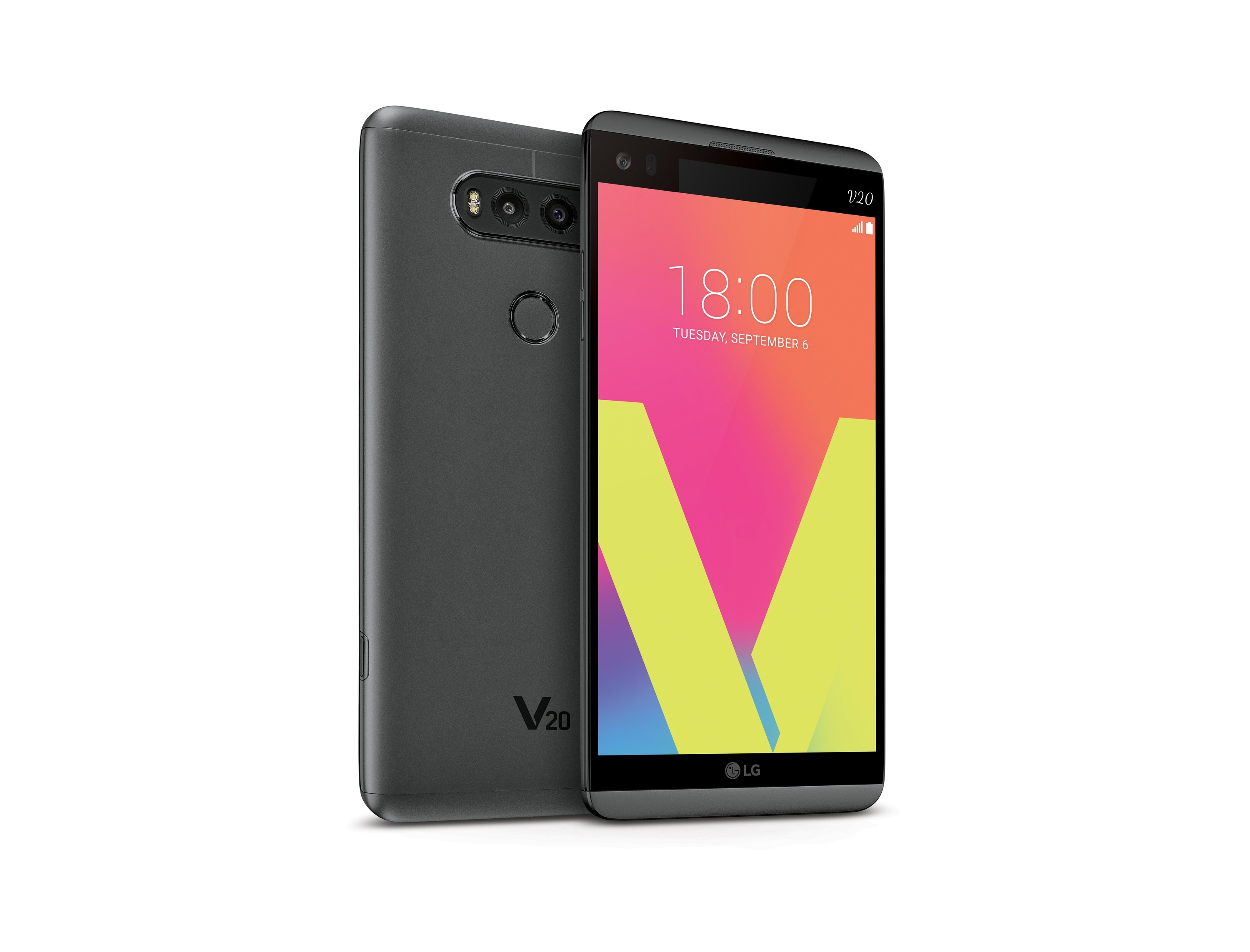
The first hardware announcement was from LG on September 6th, 2016. They announced the V20, which was made to replace the V10 from the previous year. It also brought together improvements brought to us from the G5 from this year, although they dropped the modular design. This phone is also the indirect successor of the Google Nexus 6P. This phone was the first one launched with the Android 7.0 Nougat operating system, which was usually the job of the Nexus. This device offered a few LG features, such as the 2nd always-on display, directly above the main screen. It also has a dual-camera setup, found on the G5. A fingerprint sensor, similar to Google's Nexus Imprint, is also located on the back. Google did support LG with the software, similar to what happens when LG makes a Nexus device, however, this is marketed as an LG device.

The following day, Apple launched their unofficially-annual September Apple Event. There, they announced the iPhone 7 and Plus, which came with some new features. These features are most likely the best features Apple has offered to date, although, compared to other smartphones, they are still lagging behind. The dual-camera setup on the iPhone 7 Plus is what Apple claims to be their biggest innovation, however, it is clear that LG got it before them. They are teaming up with Motorola Mobility to offer replacements for the headphone jack. They decided to dump Samsung, and decided to use a Taiwanese company to manufacturer their new Apple A10 Fusion system-on chip. Other announcements that were made include the second series of the Apple Watch. Both this and the phones are "waterproof" this year. Apple AirPods were also announced.

Google made a new event called #MadeByGoogle on October 4th of this year. They focused on Google-made hardware throughout the event. A majority of the hardware announcements were made as replacements to previously-made Google devices, however, the proceeded were made in collaboration with manufactures, yet, these are all Google. Although, some of these devices are manufactured by previous collaborative partners, but designed completely by Google. The most popular out of all of these is the Pixel, Phone by Google. Although it has a long name to it, it is a pretty nice device. The design materials are similar to those of the iPhone, made out if aluminum. This will be a Verizon Wireless exclusive, due to the fact it supports LTE-A, however, it can be found unlocked on the Google Store. Other announcements that were made include Google Daydream, Google Home, Google Wifi, and Chromecast Ultra. The Pixel is manufactured by HTC.

While Samsung didn't announce any hardware, they put out a huge money-breaking recall out for all Galaxy Note7 devices. This is something they had to do after 27 explosions have happened because of any overheating battery while charging improperly. While this happens, it is also discontinued, banned publicly, and collected from you in a fire-proof box. This was put into affect on October 10th.

The next event was by Microsoft on October 27th of 2016, yesterday. This event focused mainly on a single device, named the Surface Studio. A few accessories are out too. This is an all-in-one device, completely made by Microsoft themselves. This is made for designers, illustrators, and graphic designers. Although, you could also use it, however, for a normal user, it would be something that would be something that you would never get the full-function out of. Although not talked about during this time, the Xbox One S was also announced around this time. Also, the Surface Book was also given a hardware upgrade, although, its not a new generation device, just the new standard.

The most recent one, at the moment, is another one of Apple's. Today, they announced the next generation MacBook Pro devices, which is adding some iOS-like features to the Mac. So now, there is "Siri" and "Touch ID" features. According to what Apple usually does when making a feature universal is make them similar features, not the same ones. Also, a touch-bar was added to the keyboard, where the function keys formally were. This makes buttons which change depending on what's happening. This is similar to LG's second screen on their phones. This is one of the most innovative features I have seen from Apple, ever. The fingerprint sensor will be on the power button, almost like on some of LG's phones as well.

What do you think about the new hardware released recently?

Wednesday, October 26, 2016

google-site-verification: googleb7223f4776f425c1.html